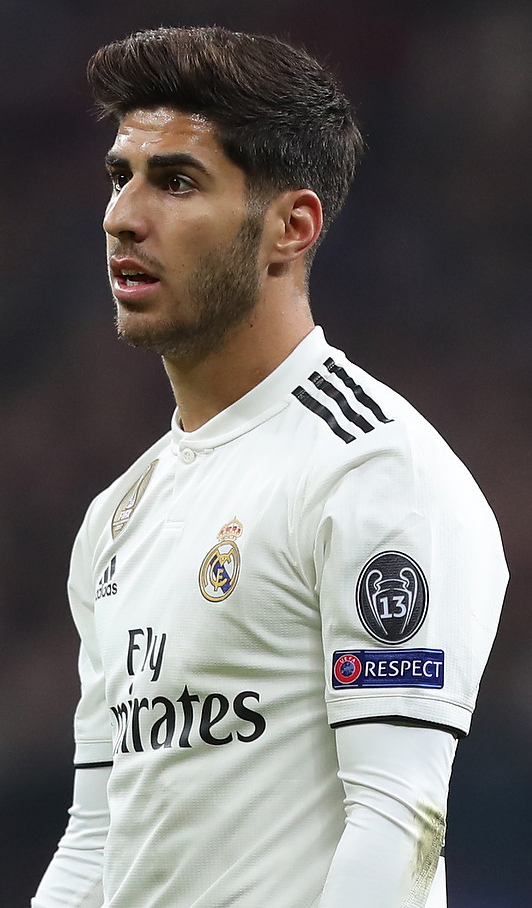
Why Marco Asensio Was Not in Luis Enrique's PSG Plans
The world of elite football is a dynamic arena where even top-tier talents can find themselves on the fringes of a manager's plans. Such was the case for Marco Asensio at Paris Saint-Germain under Luis Enrique. A player with a glittering past at Real Madrid and a reputation for exquisite technique and a potent left foot, Asensio's tenure at PSG was marked by a gradual decline in prominence, ultimately leading to his departure. But what exactly led to the decision that Marco Asensio was not included in Luis Enrique's long-term vision for the Parisian giants?
Several factors converged to push the Spanish attacker out of the spotlight at the Parc des Princes: the cutthroat competition for attacking berths, Luis Enrique's specific tactical demands, a period of inconsistent form, and the complex mechanics of the transfer market. Understanding these elements provides crucial insight into why a player of Asensio's quality found himself seeking a new challenge so soon after arriving.
The Unyielding Competition in Paris Saint-Germain's Attack
Paris Saint-Germain, with its Qatari backing, has consistently aimed to assemble a squad brimming with world-class talent, particularly in the attacking third. For any player, securing a regular starting spot in such an environment is a monumental challenge. Under Luis Enrique, the competition intensified further, with a host of formidable forwards vying for limited positions.
PSG's attacking arsenal typically features a mix of blistering pace, prolific goal-scoring, and creative flair. With established stars and ambitious new signings arriving, the forward line became an almost impenetrable wall for anyone not consistently hitting peak performance. Players like Kylian Mbappé, Ousmane Dembélé, Gonçalo Ramos, and Randal Kolo Muani often commanded the attacking roles, offering different profiles but all demanding significant playing time. This intense internal rivalry meant that squad rotation was frequent, and every appearance became an audition.
For Asensio, whose preferred role often sees him cutting in from the right wing on his left foot, the direct competition from players better suited to Enrique's high-intensity, quick-transition football became a significant hurdle. He found himself competing not just for a place in the starting XI but for meaningful minutes off the bench, making it increasingly clear why asensio not included in the most crucial fixtures became a recurring theme.
Luis Enrique's Tactical Vision: A Mismatch for Asensio?
Intriguingly, Marco Asensio initially joined PSG in 2023, reportedly as a personal signing of Luis Enrique himself. This makes his subsequent exclusion even more perplexing. However, football is a fluid game, and tactical philosophies evolve. Luis Enrique is known for his adaptable systems, often favoring high pressing, fluid positional play, and attackers who are as committed to defensive duties as they are to offensive output. His teams thrive on relentless work rate, intelligent movement off the ball, and players who can seamlessly transition between roles.
While Asensio possesses undeniable technical quality, a keen eye for goal, and exceptional passing range, his natural game doesn't always align with the aggressive, high-octane demands of an Enrique system. He is a player who thrives with time and space to orchestrate attacks, often dictating play from wider positions or just behind the main striker. However, PSG's preferred style often requires wingers to provide more direct running, consistent defensive tracking, and perhaps a higher volume of one-on-one duels.
Despite being a personal signing, Asensio's performances at PSG gradually declined after an initial period. This suggests that the initial tactical fit or the player's ability to consistently execute the coach's demanding instructions may have proven more challenging than anticipated. Ultimately, a coach must prioritize players who best embody his tactical vision for the collective, and if Asensio couldn't consistently meet those specific requirements, it explains why asensio not included in the preferred lineups became a tactical imperative.
A Dip in Form and the Aston Villa Revival
Beyond tactical fit and competition, a player's individual form is paramount. During his two and a half seasons at PSG, Marco Asensio made 47 appearances, contributing 7 goals and 11 assists. While not insignificant numbers, for a player of his caliber at a club with PSG's ambitions, these statistics suggest a period of inconsistency rather than sustained excellence. The pressure to perform at an elite club like PSG, under constant media scrutiny and high expectations, can be immense and often impacts a player's confidence and output.
This inconsistency eventually led to a turning point. In January 2025, Asensio was sent on loan to Aston Villa in the Premier League, under the tutelage of former Arsenal and PSG coach Unai Emery. This move proved to be a masterstroke for the Spaniard. At Villa, he seemed to rediscover his rhythm and confidence, making 21 appearances and registering an impressive 7 goals and 11 assists in a shorter period. This resurgence demonstrated that his quality had not diminished, but perhaps the environment and specific role at PSG were not conducive to his best performances.
His strong performances at Villa provided a crucial narrative for his eventual move, demonstrating a journey from being considered an outcast at PSG to a potential star elsewhere. For a deeper dive into his path, read Asensio's Journey: From PSG Outcast to Fenerbahçe Star. The loan spell effectively highlighted that while asensio not included in Luis Enrique's core plans, he still had plenty to offer a club that could utilize his specific talents more effectively.
The Fenerbahçe Transfer Saga: A Costly Crossroads
With Asensio clearly not featuring prominently in Luis Enrique's future plans, his departure from PSG became an inevitability. The summer transfer window saw an intense saga unfold regarding his next destination, with Turkish giants Fenerbahçe emerging as a primary suitor. Fenerbahçe had been in contact with Asensio from the start of the transfer season and quickly reached an agreement with the player on personal terms.
However, the transfer was initially fraught with difficulties, primarily concerning the financial demands. Fenerbahçe halted the transfer despite agreeing terms with the player due to the high costs involved, reportedly waiting for PSG to reduce their asking price. At one point, the Turkish club even decided to explore alternative players, prioritizing funds for other targets like Kerem Aktürkoğlu. Former Fenerbahçe coach José Mourinho even alluded to issues with certain transfers not meeting expectations, implicitly referencing the complexities around Asensio's potential move.
Ultimately, after a period of negotiation and the looming September 1st transfer deadline, a resolution was found. PSG confirmed Asensio’s permanent departure, and he officially signed with Fenerbahçe until 2028, with an option for an additional year. The transfer fee, reported to be €15 million by French media, was widely considered a significant bargain for a player of Asensio’s caliber and experience. This acquisition represented a major statement of intent from the Turkish club after their Champions League elimination, bringing versatility, international pedigree, and a proven ability to influence games. To understand the full implications of this shrewd move, explore Marco Asensio Joins Fenerbahçe: A Bargain for Turkish Giants.
Conclusion: A New Chapter and Lessons Learned
The story of Marco Asensio at Paris Saint-Germain is a poignant reminder of the relentless demands of top-tier football. His journey illustrates that even immense talent, initially sanctioned by the coach, is not always enough to guarantee a consistent role in a squad teeming with superstars and governed by a specific tactical philosophy. The combination of intense competition, a potential mismatch with Luis Enrique's tactical vision, a period of inconsistent form, and the financial intricacies of the transfer market collectively led to the decision that asensio not included in PSG's future plans.
For Marco Asensio, the move to Fenerbahçe represents a fresh start and an opportunity to reclaim his status as a pivotal player, bringing his unique blend of creativity and goal-scoring prowess to the Turkish Süper Lig. For PSG and Luis Enrique, it underscores the harsh realities of squad management at the highest level, where difficult decisions must be made to maintain tactical coherence and competitive edge.